Short answer: tamper-evident food packaging shows visible, hard-to-hide evidence if the pack has been opened between the kitchen and the customer. The four most common ways to achieve it are a tear-away tab or strip moulded into the container, a sealing film, a shrink band and a printed security label. The right choice depends on the food, the temperature, the order volume and how much you can spend per pack. This guide compares them and gives a checklist for specifying and testing them with your factory.
This is general information, not legal advice. Rules for delivered food differ by country, state and delivery platform and are changing, so check the requirements that apply to your business before you rely on any feature.
Why Tamper Evidence Became a Standard Request
Online ordering turned millions of kitchens into delivery kitchens. A meal now passes through a bag, a rider, a lift and a front door before the customer sees it, and customers want proof that nobody touched it on the way. Restaurants, ghost kitchens and meal-prep brands also use seals for brand reasons: a branded seal tells the customer the order is fresh from the kitchen. Some jurisdictions have introduced or adopted rules aimed at food delivered through third-party platforms, California's AB 3336 being a commonly cited example, and delivery platforms publish their own packaging expectations. Because wording and scope vary, treat these as a reason to check your local rules rather than as a template to copy.
Tamper evidence is not the same as tamper-proof. A seal cannot stop a determined person; it shows that the pack was opened. That distinction also helps you write honest marketing copy.
Tamper-Evident Options Compared
| Method | How it works | Suits | Cost level | Watch out for |
|---|---|---|---|---|
| Moulded tear-away tab or strip | A thin bridge on the lid or hinge tears and cannot be re-attached | Hinged clamshells, salad bowls, deli containers | Low per unit, but needs a custom mould | Needs mould design and tooling; bridge thickness must be tested |
| Heat-sealed lidding film | Film welded to the rim must be peeled or torn | Bowls, cups, meal trays, cold and hot meals | Medium; requires a sealing machine | Seal temperature, rim width and film type must match the tray |
| Shrink band or sleeve | Plastic band around the lid joint is cut to open | Cups, tubs, round deli containers | Low to medium | Applied by heat tunnel; hot food can distort thin bands |
| Security label or void sticker | Adhesive label tears or shows a pattern when removed | Any lid, bags, boxes and cartons | Low; no tooling | Adhesive can fail on wet or oily surfaces; branded labels are a visible marketing opportunity |
| Snap lock with breakable lock | Lock tab snaps off when first opened | Fast-food boxes, bakery boxes, sushi trays | Low per unit, needs custom mould | Can be re-closed if the tab is not fully severed |
Which Format for Which Food
- Burgers, fried food and wraps: hot food produces steam, which weakens adhesive labels. A moulded tab on a vented fast-food box works better; see our fast food box guide.
- Salads, bowls and cold meals: hinged salad containers with a snap lock and a label strip are the standard; see the salad and deli container guide.
- Sushi and poke: anti-fog lids plus a small seal sticker keep the view clear; see our sushi tray guide.
- Soups, sauces and liquids: combine a tight lid, a sealing film or a shrink band with a leak-proof design; see the leak-proof lids and sealing film guide.
- Bubble tea and cold drinks: heat-sealed film is the strongest tamper evidence and also prevents spills; see the cold drink cup guide.
- Bakery and cake: label strips across the lid join work well and carry branding.
Design Details That Decide Whether a Seal Works
- The seal must cross the opening path. If the lid can be lifted at a corner without breaking anything, the seal is cosmetic.
- Breakaway bridges need controlled thickness. Too thick and the customer struggles to open; too thin and it breaks in transit.
- Surface and adhesive must match. Polypropylene has low surface energy, so label adhesives and print treatments must be chosen for PP; PET is easier.
- Condensation and grease reduce label adhesion. Test with the actual food at the actual temperature.
- Stacking and bagging. A tab that survives on the bench can snap when 12 boxes are stacked in a delivery bag.
- Ventilation. Hot fried food needs vent holes; do not seal them with film. Alternatively, vent through a covered slit.
- Branding. A printed seal strip can carry your logo and a "sealed fresh" message. See our custom branding guide.
Testing a Tamper-Evident Pack
Run these checks on pre-production samples before approving a mould or an order:
- Opening test: open and try to re-close the pack ten times with different people. Can a stranger re-close it without it looking opened?
- Transit test: fill the pack, bag it, and ride in a vehicle or run a vibration test; the seal must stay intact.
- Temperature test: hot-fill and cold-chain versions; check labels and tabs after 30 to 60 minutes.
- Drop and stack test: drop a bagged order from tabletop height and stack a realistic load.
- Customer test: have non-experts open it. If they struggle, complaints will follow.
The test conditions here are practical suggestions, not a formal standard. Document what you tested, so you can show your own due diligence.
Food-Contact and Compliance Points
A tamper-evident feature is usually outside the food-contact surface, but it still needs consideration. Moulded features are part of the same resin, so the usual food-contact documents apply; see the FDA and EU compliance guides. Labels and shrink bands should not touch the food, and adhesives should be kept away from contact surfaces. If your film is heat-sealed to the tray, the seal layer is part of the food-contact material and needs its own documentation. Our factory operates under ISO 9001:2015 and BRCGS Packaging certification, with third-party SGS reports available on request; we provide these as inputs to your own compliance file.
Cost, MOQ and Lead Time
Labels and shrink bands need no tooling and can be added at your packing line from small quantities. A moulded tamper-evident feature is part of a custom mould, which fits our custom-programme terms: typically 30,000 to 100,000 pieces, tooling 12 to 20 days and production 15 to 30 days. Stock containers ship from one carton. The OEM and custom mould guide and the MOQ and lead time guide explain how to plan a custom mould with a seal feature.
Buyer Checklist
- List your food types, temperatures and expected time in the bag.
- Pick the seal method per food: moulded tab, film, band or label.
- Ask the factory for samples with the seal applied, not just plain containers.
- Run the five tests above and record the results.
- Check local and platform rules for delivered food.
- Confirm food-contact documents for the resin, film and any adhesive near the food.
- Decide whether the seal also carries branding.
- Agree MOQ and tooling timing before launching a seasonal menu.
How We Support Delivery Programmes
We manufacture clamshells, bowls, sushi trays, cups and fast-food boxes in our own plant, and we can discuss tamper-evident tab and snap-lock features in custom mould projects. Send us your menu items, delivery conditions and target volumes and we will propose container and seal combinations. Browse the fast food boxes and salad boxes, or contact our team to request samples.
Buyer FAQ
What is tamper-evident food packaging?
What is the cheapest way to make takeout containers tamper-evident?
Are tamper-evident containers legally required for food delivery?
Which tamper-evident method suits hot food?
Do tamper-evident features need a custom mould?
How should I test a tamper-evident pack?
Questions about this guide?
Tell us your product, quantity and target market — our engineers will help you apply it to your project.
Related Guides
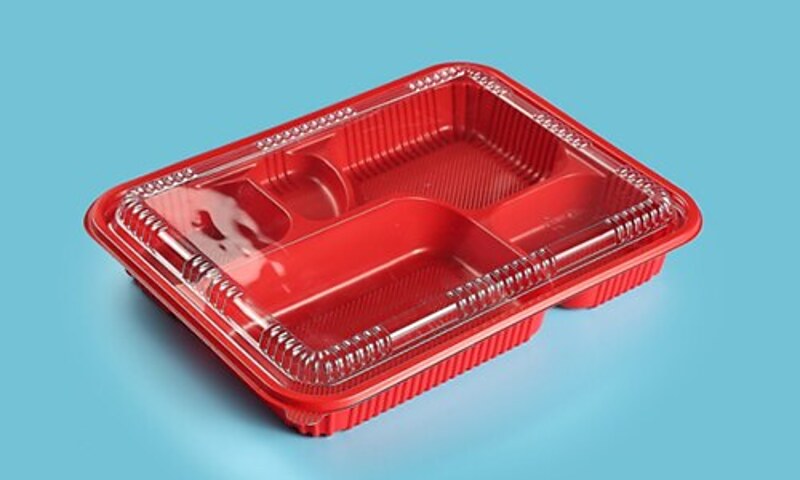
Leak-Proof Food Packaging: Snap Lids, Sealing Film and Tamper…
How to stop food containers leaking in delivery: snap-fit lids, heat-seal film, peelable seals, anti-fog, tamper evidence and…
Read guide →Fast Food & Compartment Box Buying Guide: Bagasse vs PP, Vents and…
How to specify fast food and compartment packaging: bagasse vs PP trade-offs, compartment layouts, grease resistance, vent…
Read guide →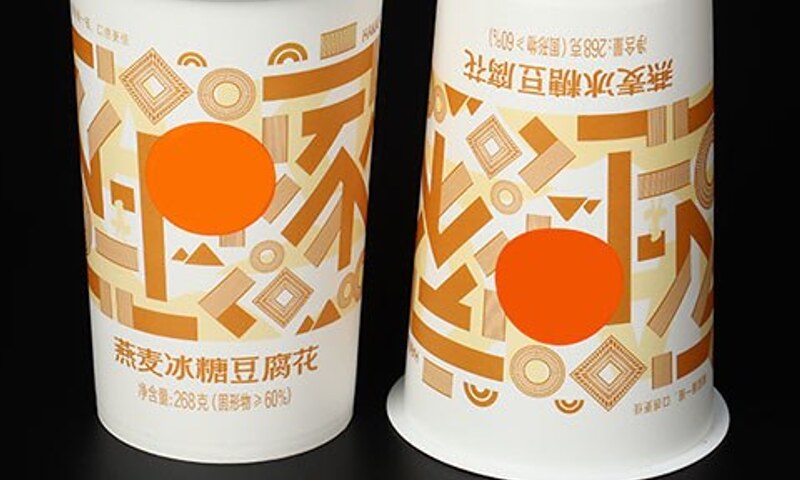
Custom Branding & Printing Guide for Food Packaging: Direct Print…
How to choose a branding method: direct offset/flexo printing vs printed labels vs shrink sleeves vs IML, Pantone color…
Read guide →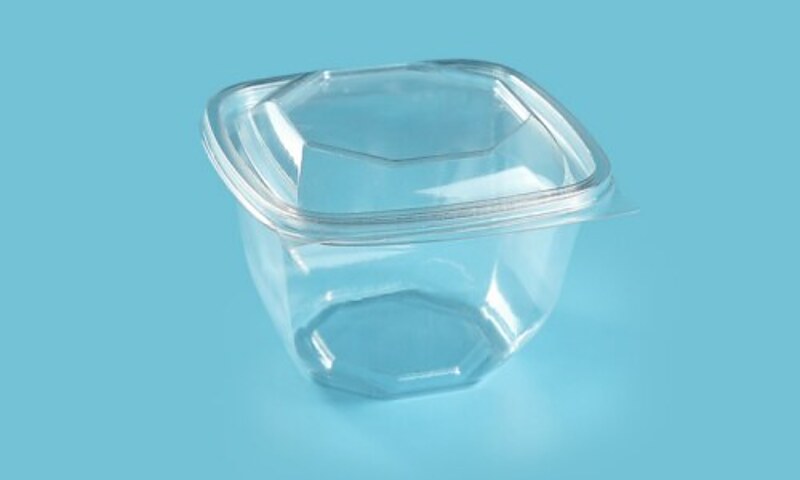
Salad & Deli Container Buying Guide: Leak-Resistant Lids,…
How to specify wholesale salad and deli containers: hinged vs bowl-and-dome formats, leak-resistant lid engineering,…
Read guide →
Black Plastic Food Trays and Recycling: Why Carbon Black Fails Sorting and…
Black trays look premium, but carbon black can hide a tray from near-infrared sorting lines. Learn the options: detectable…
Read guide →
Anti-Fog Food Packaging: Lids, Films and Coatings Explained, With Testing…
Fogged lids hide fresh food and reduce sales. Learn how anti-fog works, the difference between coating and additive, how to…
Read guide →