A salad container's job doesn't end when the lid closes — it has to survive a delivery bag tip, a shelf reshuffle and a car ride home without dressing pooling in the bottom of a takeout bag. This guide walks through the format, lid and sizing decisions that determine whether a salad or deli container actually performs once it leaves the store.
Container Formats
Salad and deli packaging comes in three structural families, and the right one depends on how the product is filled and how far it travels.
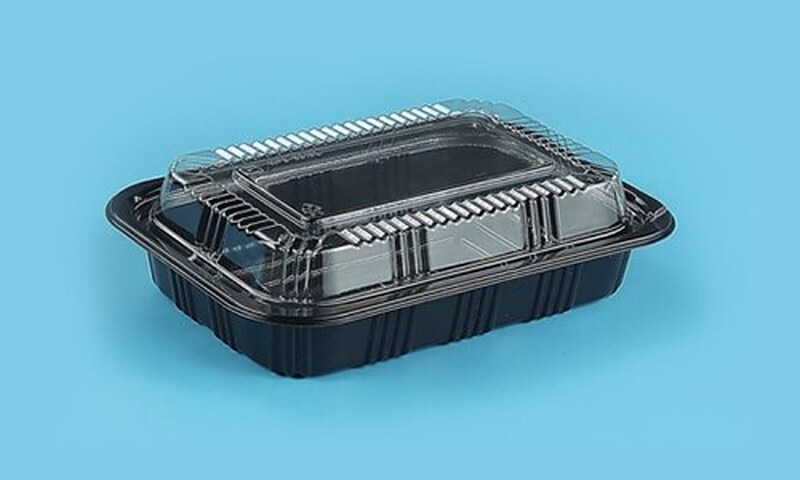
- Hinged one-piece containers: the lid is molded on with an integral hinge, so there's no loose lid to misalign or lose. This is the default for self-serve salad bars and most grab-and-go retail programs because it closes fast at the point of sale.
- Bowl-and-dome two-piece sets: a separate dome lid snaps onto a round bowl's rim, similar in principle to a sushi tray-and-lid pair. This gives more usable headspace for a piled salad or a tall entrée portion than a hinged clamshell of the same footprint.
- Multi-compartment party platters: larger flat trays with a fitted lid, built for catering and deli-counter platter programs rather than single servings.
What Actually Makes a Lid Leak-Resistant
"Leak-resistant" is a claim worth pressure-testing before you accept it. The engineering that matters is the overlap between the lid's skirt and the container wall — a deeper, snugger overlap holds liquid in during a sideways tip better than a shallow lid that only closes flush on top. On hinged containers, the lock tabs at the front (and sometimes the corners) are what keep the two halves from popping open under the vibration and shifting that happens inside a delivery bag.
Ask your supplier whether their leak-resistance claim was tested only as a static fill sitting flat, or under a pack-and-tip test that simulates a delivery bag being carried and set down at an angle. Those are different tests with very different real-world implications, and only the second one tells you how the container behaves in an actual delivery or takeout scenario.
For dressing-heavy salads, a small side soufflé cup for dressing reduces leak risk more reliably than any lid design on its own — it's worth offering both the integrated compartment and a separate dressing cup as options rather than relying on lid engineering alone.
Compartment Options
Compartments matter for programs that keep a protein, a dressing or a crunchy topping separate from the base salad until the customer is ready to eat. The detail buyers miss is wall height relative to fill line: a divider that's shorter than the filled product's surface level doesn't actually stop liquid or dressing from migrating across compartments once the container is tilted, so a shallow divider on a deep container gives a false sense of separation. Ask for the divider height relative to your planned fill volume, not just the compartment count.
Sizing From Side Salad to Party Platter
| Capacity range | Typical use |
|---|---|
| 8–16 oz | Individual side salad, small deli portion |
| 24–32 oz | Entrée salad, meal-kit component, family-size deli side |
| 48 oz and up | Family platter, catering tray, deli-counter bulk portion |
Beyond raw capacity, check the nested stack height per case — a bowl with a steep taper nests more tightly and ships more units per carton than a straight-walled bowl of the same capacity, which affects freight cost per piece more than most buyers expect.
Material & Finish
| Choice | Where it's used | Trade-off |
|---|---|---|
| Clear PET | Default for most salad and produce-forward programs | High clarity shows freshness and layered ingredients; the main selling point for cold, visible product |
| Kraft-look / two-tone base | Premium bowl programs, branded deli lines | Still a PET or PP body with a textured or colored base; adds shelf differentiation without giving up dome clarity |
| PP | Hot deli sides — mac and cheese, hot vegetables, rice sides | Holds up to warm fill temperatures without the softening or clouding risk that PET carries at higher heat |
Tamper-Evident Options
Delivery and grab-and-go programs increasingly specify a visible tamper indicator rather than relying on the standard hinge or snap closure. The two common options are a perforated tear tab molded into the lid, and a printed shrink band applied around the closed container after filling. Confirm with your supplier which option is compatible with your filling line speed, since a shrink band typically requires an extra application step versus a molded-in tab.
Case Counts & Handling
Hinged containers ship flat-nested and take up relatively little cube per unit; bowl-and-dome sets ship as nested bowls with lids nested separately, similar to sushi tray logistics. Ask for case weight and dimensions specific to your chosen size and material — a PP container of the same footprint as a PET one will weigh more per case, which affects both freight cost and how your receiving team plans dock space.
Quality Checks Worth Doing on Receipt
- Hinge or lid closes fully flush without gapping at any point around the rim.
- Compartment dividers hold their shape and height under a normal fill weight rather than flexing down.
- Base shows no flex or "oil-canning" when lifted by one edge with a full fill.
- Wall thickness looks consistent when held up to light — no visibly thin spots.
- Containers nest and de-nest cleanly at packing-line speed without sticking together.
MOQ & Lead Time
Stocked standard sizes can usually ship a trial order from existing cavities with no tooling cost. A new compartment layout, a size not currently in the catalog, or a color/finish change generally requires new tooling, with MOQs typically starting around 30,000–100,000 pieces depending on mold complexity, and lead times of roughly 15–30 days after sample approval plus ocean transit.
Compliance
Salad and deli containers need the same food-contact documentation as any other resin-based packaging: an FDA 21 CFR statement for the resin used, migration test data if the goods are EU-bound, and batch traceability from the factory. See our FDA food-contact compliance guide for the full document checklist to request.
Buyer FAQ
Which is more leak-resistant, a hinged container or a bowl-and-dome set?
Can we get compartments added to a hinged container?
Can salad and deli containers handle hot-filled items?
Do you offer a kraft-look or two-tone base for a premium bowl line?
What MOQ applies for a compartment change versus a full custom mold?
How much headspace should we leave for a piled salad?
Need help specifying a salad or deli container program?
Send your fill weight, dressing handling preference and delivery format — our team will confirm the closest stock match or scope a custom tooling quote within one business day.
Related Guides
Sushi Tray Buying Guide
The same lid-and-rim engineering logic applied to sushi trays and poke bowls.
Read the guide →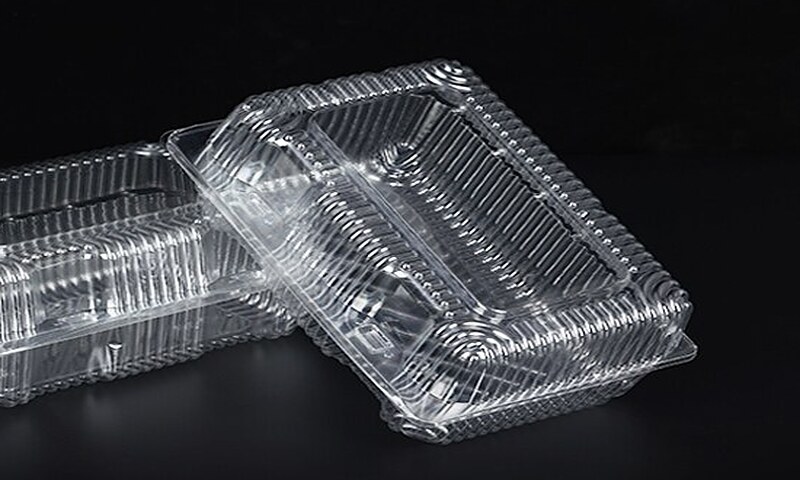
PET vs PP vs rPET vs CPET
Why PET dominates clarity-first formats and where PP fits hot-fill items.
Read the guide →
FDA Compliance Guide
The document checklist to request for any food-contact packaging.
Read the guide →