Choosing the wrong plastic for a food package shows up fast: fogged lids, warped trays in the oven, cracked packs in the freezer, or a sustainability claim you cannot document. Most disposable food-packaging failures trace back to one decision — the resin. This guide explains how PET, rPET, PP and CPET differ, where each performs, and how to match them to a retail or foodservice program.
The Four Workhorse Resins at a Glance
Thermoformed food packaging is dominated by four materials. They all start as sheet and are formed on similar equipment, but their molecular structure changes clarity, temperature range and recycling behavior.
| Resin | Clarity | Temperature range | Best at | Common formats |
|---|---|---|---|---|
| PET / APET | Excellent | Cold/ambient | Display, rigidity | Clamshells, salad bowls, sushi lids, cold cups |
| rPET | Excellent | Cold/ambient | Display + recycled content | Berry punnets, salad bowls, cold cups |
| PP | Translucent/opaque | Freezer to microwave | Toughness, heat | Meat trays, hot containers, sauce pots |
| CPET | Opaque | Freezer to ~220°C oven | Ovenable ready meals | Dual-ovenable meal trays |
PET and APET: Clarity That Sells the Product
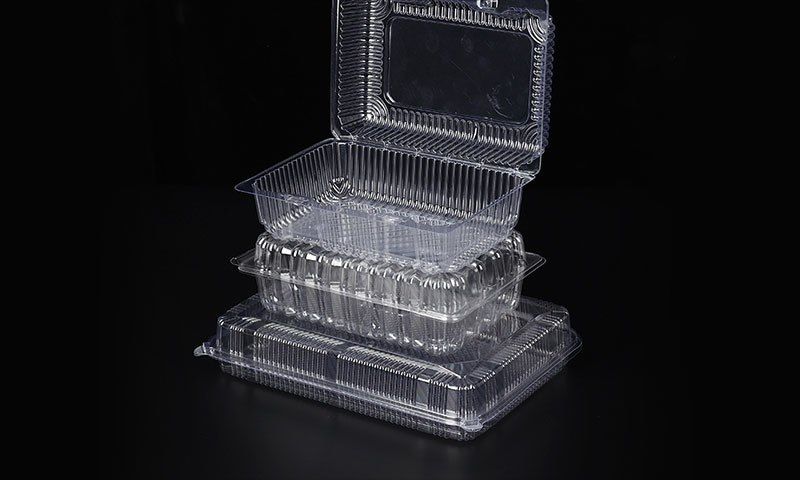
Polyethylene terephthalate (PET), in its amorphous sheet form (APET), is the default when shoppers need to see the food. It is glass-clear, rigid, and forms crisp edges and tight undercuts — the features that make clamshells snap shut and lids seal precisely.
- Use PET for: fruit clamshells, salad and deli bowls, bakery boxes, sushi lids and cold cups.
- Limitations: PET softens well below oven temperatures and is not designed for hot fill or microwave reheating.
- On the shelf: high clarity increases impulse purchases in produce and grab-and-go categories.
rPET: The Same Package, With a Recycled-Content Story
Recycled PET (rPET) is chemically the same polymer as virgin PET. Cleaned and re-extruded post-consumer or post-industrial PET becomes food-contact sheet once it meets the relevant regulatory pathways. Functionally, an rPET clamshell forms, seals and displays like a PET one; the difference is the recycled-content percentage and the documentation behind it. Our rPET vented berry clamshell is a typical example of a stock format built on this material.
If a package makes a recycled-content claim on the shelf, buyers should ask for GRS (Global Recycled Standard) chain-of-custody documentation, not just a supplier statement.
Retailers increasingly specify 30–100% rPET for produce, salads and cups. Reputable factories can supply GRS-certified material and state the actual percentage per production lot.
PP: The Tough, Temperature-Tolerant Choice
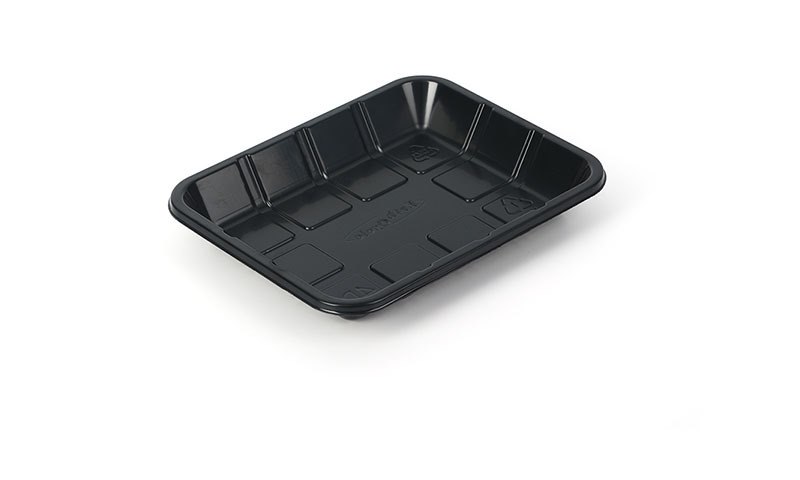
Polypropylene (PP) is the flexible, heat-resistant member of the family. It flexes instead of shattering, tolerates freezer temperatures and microwave reheating, and is widely used in opaque black or white for protein. Black PP MAP trays make red meat visually pop while providing a reliable heat-seal flange. For the sealing and sizing details specific to protein packs, see our Meat Tray Buying Guide.
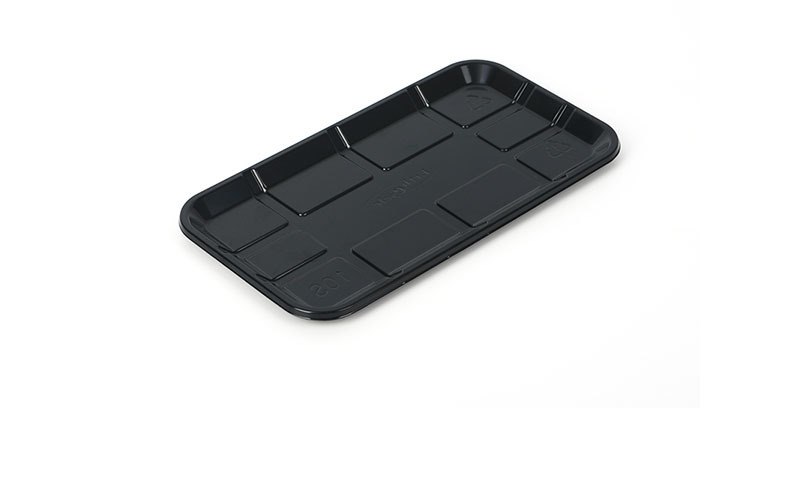
- Use PP for: MAP and skin-pack meat trays, microwaveable containers, hinged meal containers, sauce and portion pots.
- Trade-off: PP is naturally translucent to opaque — it cannot match PET's optical clarity, so it is a poor fit when the food must be fully visible.
- Sustainability: PP is recyclable; food-grade rPP is developing but less established than rPET.
CPET: When the Package Goes From Freezer to Oven
Crystallized PET (CPET) is heat-treated during manufacture so it stays rigid at oven temperatures that would melt ordinary PET. It is the standard material for ready meals that travel frozen and reheat in a conventional or microwave oven — typically rated to roughly 220°C. Our 3-compartment CPET frozen meal tray is a common format for this use case.
CPET is opaque (commonly black or white), so it is chosen for function rather than display. Its heat-seal flange also supports lidding film for extended frozen shelf life.
How to Select in Five Questions
- Does the customer reheat in an oven? Yes → CPET. Microwave only → PP. No reheat → PET/rPET.
- Must the food be visible? Yes → PET or rPET.
- Is there a recycled-content target? Yes → rPET with GRS documentation.
- What is the sealing method? MAP/skin-pack and tray sealers need a flat, dimensionally stable flange — PP for protein, CPET for meals.
- What abuse does distribution impose? Heavy/frozen loads favor PP and CPET toughness; lightweight produce suits PET.
Cost, Gauge and Lead Time: What Actually Drives Price
Resin choice affects landed cost in three ways: raw material price per kilogram, the sheet gauge required for the application, and tooling complexity. As a general rule:
- PET/rPET is usually the most economical of the four at equivalent wall thickness, which is one reason produce and bakery packers default to it wherever clarity and rigidity requirements allow.
- PP costs more per kilogram than PET but often runs a lighter gauge for the same stiffness in small formats, which partially offsets the difference — and its toughness reduces breakage-related returns.
- CPET carries the highest cost premium of the four. The crystallization step and tighter dimensional control needed for oven performance add process time, so buyers should expect this reflected in unit price rather than treat it as a negotiable line item.
- Tooling and lead time track the material only indirectly: a new mold typically takes 12–20 days regardless of resin, but CPET and heavier-gauge PP molds often need more validation cycles to hold flange flatness, which can add a few days to first-article approval.
Buyers switching an existing SKU from virgin PET to rPET, or from PP to CPET, should re-quote rather than assume a like-for-like price, since gauge and cavitation are frequently adjusted at the same time.
Recyclability and End-of-Life: What Happens After the Store
All four resins are technically recyclable, but real-world acceptance differs sharply by material and color:
| Resin | Resin code | Typical curbside acceptance (US) | Practical note |
|---|---|---|---|
| PET / rPET | #1 | Widely accepted | Most established stream; clear color is easiest to sort |
| PP | #5 | Growing but inconsistent | Accepted in many but not all municipal programs |
| CPET | #1 (crystallized) | Rarely accepted | Opaque black color is often not detected by optical sorters at recovery facilities |
The black-pigment issue is worth flagging to retail customers directly: near-infrared sorting equipment used at most US material recovery facilities struggles to detect carbon-black plastics, which is why black CPET and black PP trays — despite being technically recyclable resins — often end up in landfill streams regardless of the customer's intentions. Retailers targeting a genuine end-of-life claim should consider undyed, white or naturally colored PP and CPET options, or lean further into rPET formats where the recycling pathway is proven.
Compliance Does Not Change by Resin
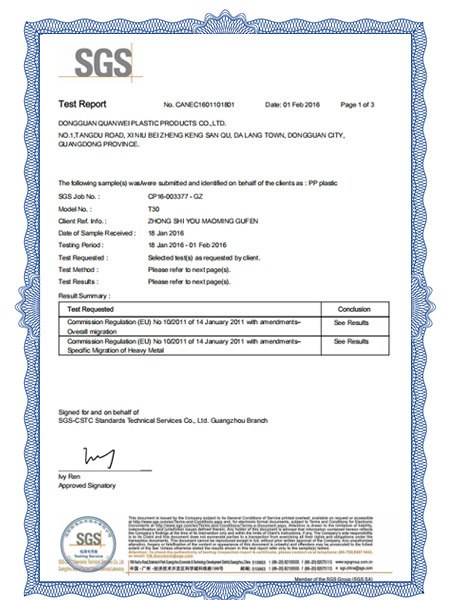
Whatever the polymer, food-contact packaging sold into the US must be manufactured from resins that satisfy FDA 21 CFR requirements, and EU-bound goods must meet EU 10/2011. The resin choice is a performance decision; the compliance paperwork is a baseline the factory must provide for every material, including migration statements and, for rPET, the recycled-content pathway. For the full document checklist to request from a supplier, see our FDA Food-Contact Compliance Guide.
Buyer FAQ
Can rPET be used for direct food contact in the US?
Which is better for meat trays, PP or PET?
Can CPET go in the microwave and conventional oven?
Are these materials recyclable curbside in the US?
Why isn't black CPET or black PP accepted for recycling even though the resin itself is recyclable?
How much more expensive is CPET than standard PP or PET?
Need a material or size recommendation?
Send your product, shelf temperature, sealing method and annual volume — our engineering team replies with a resin, gauge and format recommendation and factory pricing within one business day.
Related Guides
Fruit Clamshell Packaging Guide
Vents, rPET content and damage control for produce packs.
Read guide →