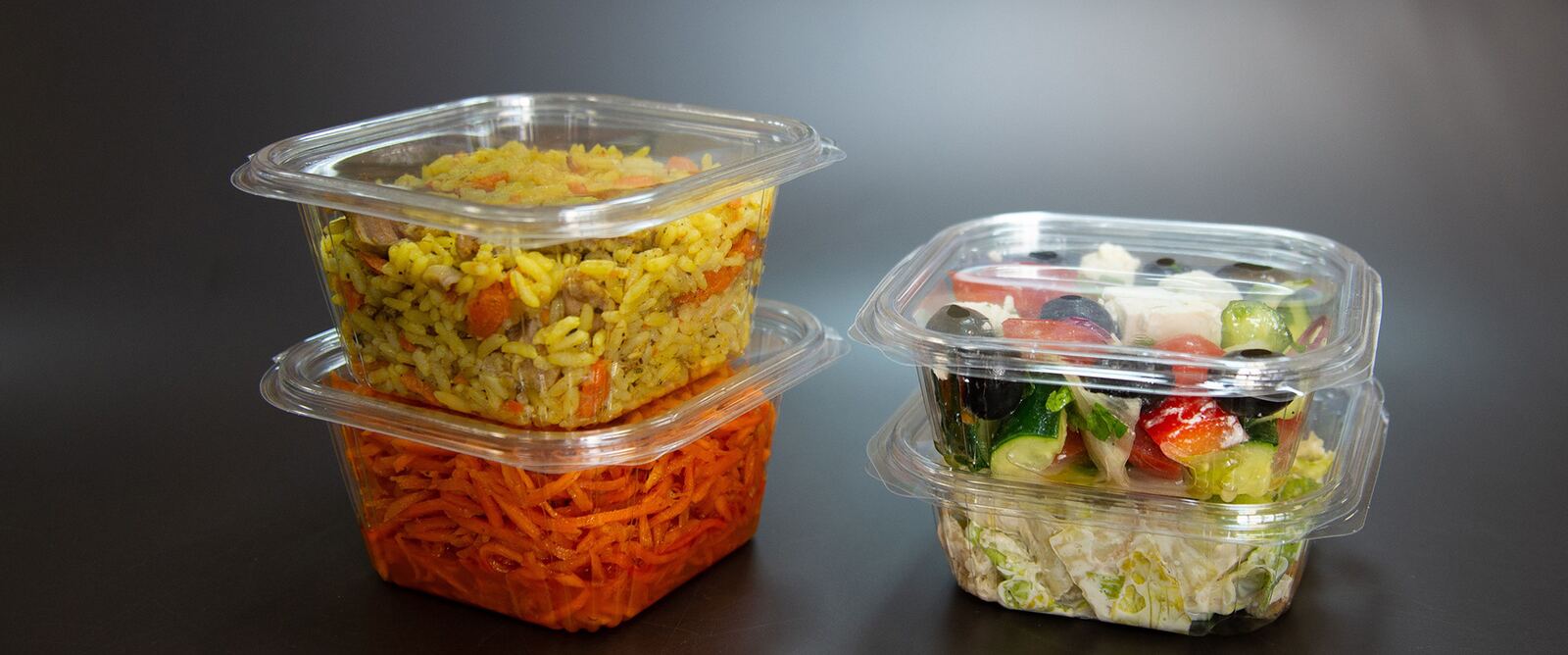
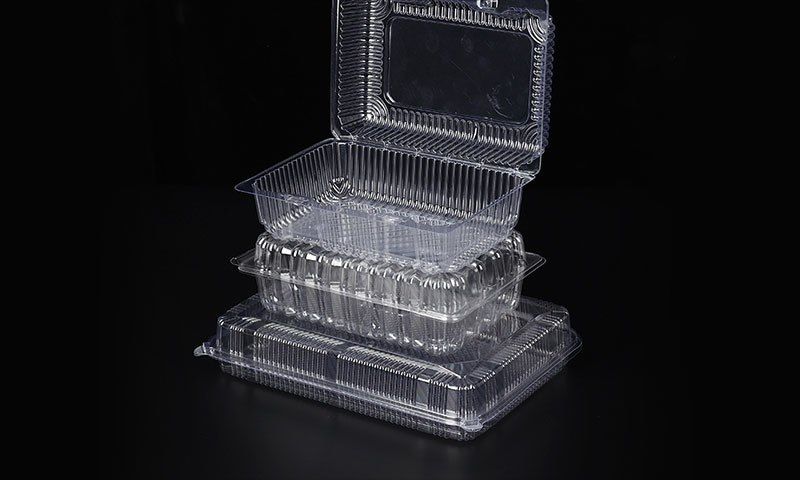
Retailer vendor onboarding forms, distributor audits and import reviews all ask the same core question: is the packaging lawful for direct food contact? This guide breaks down what US buyers should request from a disposable food-packaging factory, how FDA rules apply to plastics, and what good documentation looks like.
How the FDA Regulates Food-Contact Plastics
In the United States, food-contact materials are regulated as "food contact substances." Rather than approving each finished tray, the FDA framework authorizes the substances used to make it — monomers, additives, colorants and processing aids — under Title 21 of the Code of Federal Regulations and, where applicable, Food Contact Notifications.
A compliant finished package is built from properly authorized raw materials, manufactured under controls that keep it safe and traceable, and used within its intended conditions (cold, frozen, microwave, etc.). For how this plays out differently across PET, PP and CPET, see our materials comparison guide.
The Document Set a Factory Should Provide
| Document | What it proves |
|---|---|
| FDA food-contact statement / declaration of compliance | Materials are formulated for direct food contact under applicable 21 CFR provisions |
| EU 10/2011 declaration (if EU-bound) | Compliance with the European plastics regulation, including migration testing |
| Migration / heavy-metal test reports | Independent lab results on overall and specific migration where relevant |
| Material & resin declarations | Exact polymer, grade, colorant and recycled content per SKU |
| Batch traceability records | Ability to trace a shipment from resin lot to forming line and pack date |
| GRS certificate (rPET claims) | Chain-of-custody evidence for recycled-content percentages |
Quality Systems Behind the Paperwork
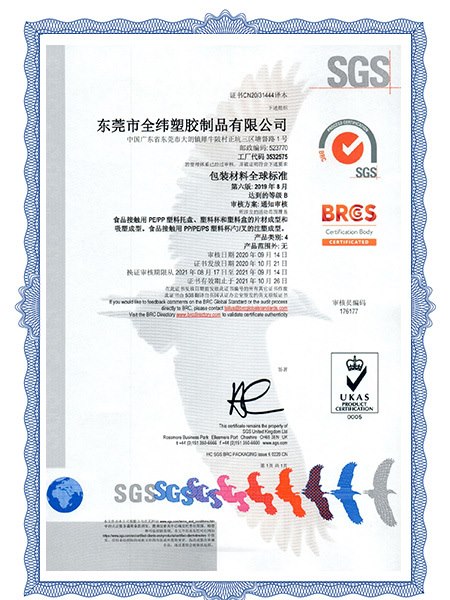
Documents alone are not enough. A credible factory pairs them with a working quality system: incoming resin verification, first-article and in-process dimensional checks, seal/leak validation, AQL sampling before packing, and clean, dust-controlled packing areas. ISO 9001 provides a quality-management baseline; FSSC 22000-aligned controls indicate a food-safety mindset; BRC certification for packaging is increasingly common among export-focused plants. See our factory and QC process for how these controls run on our own lines.
Retailer Vendor Onboarding: What Buyers' Compliance Teams Actually Check
Beyond the packaging-specific documents above, most US supermarket chains, distributors and foodservice buyers run new suppliers through a vendor-onboarding or "new item" process before the first PO is cut. For imported plastic packaging, that process typically wants to see:
- A named, responsible US importer of record for customs and recall purposes, not just an overseas factory contact.
- Certificates of insurance and product liability coverage naming the retailer, sized to the buyer's minimum requirement.
- A facility food-safety certification (ISO 9001, FSSC 22000, BRCGS Packaging, or equivalent) rather than a self-issued quality statement.
- SKU-level specification sheets that match what was quoted — dimension, gauge, resin, color and print — so the buyer's system does not flag a mismatch at receiving.
- A documented recall/non-conformance procedure, even for packaging, since a contamination or mislabeling event still triggers the retailer's own recall protocol.
Building this file before the first quote request, rather than assembling it under deadline pressure after a buyer asks, is one of the most effective ways an overseas factory can shorten a new-vendor approval cycle.
State-Level Rules That Go Beyond the FDA Baseline
FDA authorization is necessary but not sufficient. A growing number of US states layer additional packaging requirements on top of the federal baseline:
- California Proposition 65 requires warnings for products that expose consumers to listed chemicals above certain thresholds — a separate analysis from FDA food-contact status.
- Extended producer responsibility (EPR) packaging laws in states including California, Oregon, Colorado and Maine are phasing in reporting and fee obligations for companies that place packaging into those markets, with requirements rolling out through the mid-to-late 2020s.
- State-level restrictions on specific additives or formats (for example PFAS in food packaging) are increasingly common and vary by state and effective date.
Because these rules shift year to year and by state, buyers selling into multiple states should ask their packaging supplier which of these apply to the specific SKU and material, rather than assuming FDA compliance alone covers every state requirement.
Marketing Claims Must Match the Evidence
- "BPA-free" — most PET and PP food packaging does not use BPA; state it only where accurate, not as a safety shortcut.
- "Microwave safe" / "oven safe" — tied to resin (PP/CPET) and validated use conditions, not generic wording.
- "Recycled content %" — substantiated per lot with GRS documentation.
- "Compostable" — requires certified material (e.g., PLA to the relevant standard); conventional PET/PP are not compostable.
California Prop 65 is a separate consideration for products sold in California. Responsible factories review formulations and provide warnings or documentation where needed rather than ignoring the requirement.
A Practical Onboarding Checklist
- Collect FDA statement and, if relevant, EU 10/2011 and migration reports per material.
- Confirm the resin and colorant declarations match the quoted SKU.
- Request GRS certificates for any rPET claim and note the percentage.
- Verify intended-use conditions (cold/frozen/microwave/oven) match your product.
- Ask how a batch is traced and how a non-conformance is handled.
- Run first-article fit and seal testing on your own line before volume orders.
Buyer FAQ
Does the FDA approve individual plastic food trays?
Do I still need EU 10/2011 documents if I only sell in the US?
What does a migration test actually check?
How do I verify a factory's claims are genuine?
Do state extended producer responsibility (EPR) laws apply to imported food packaging?
What should be ready before a retailer's vendor-onboarding review?
Need a material or size recommendation?
Send your product, shelf temperature, sealing method and annual volume — our engineering team replies with a resin, gauge and format recommendation and factory pricing within one business day.
Related Guides