Fast food and combo-meal packaging has to do three jobs at once: keep food hot without going soggy, survive a delivery bag ride without leaking, and photograph well when a customer opens it. This guide walks through the format, material and design decisions that determine whether a compartment box actually delivers on all three.
Box Formats
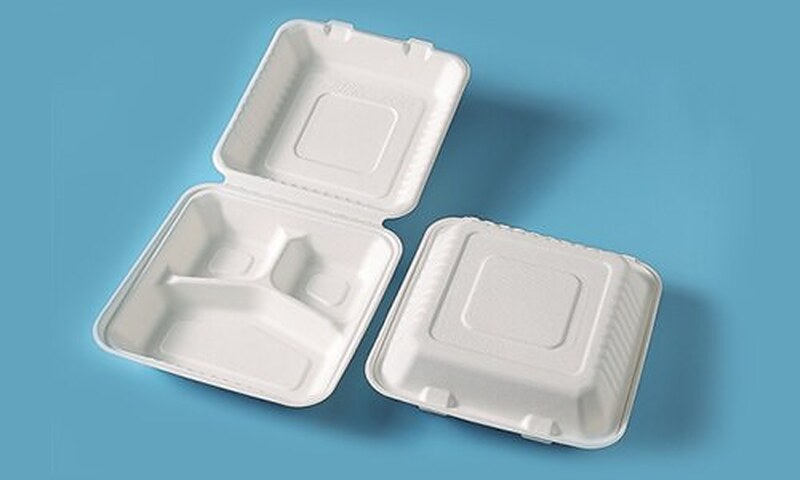
- Bagasse clamshells: a hinged, fiber-based container molded from sugarcane fiber, most often used for combo meals where a compostable or plant-fiber look is part of the brand positioning.
- Divided plates: an open, unlidded round or oval plate with molded divisions, used more for dine-in or short-hold takeout than for longer delivery rides.
- Compartment trays with a lid: a rigid PP tray with 2–6 compartments and either a hinged or separate clear dome lid, giving better visibility of the meal than an opaque bagasse clamshell.
- Hinged compartment boxes: a one-piece PP box with an integral lid, similar in principle to a hinged salad container but built around a compartment layout for a main plus sides.
Bagasse vs. PP: The Real Trade-Off
| Factor | Bagasse | PP |
|---|---|---|
| Visual positioning | Reads as a plant-fiber, eco-forward choice at the point of sale | Reads as standard clear/rigid plastic packaging |
| Clarity | Opaque — no visibility of the food through the container | Can pair with a clear dome lid for full visibility |
| Oven/microwave use | Generally microwave-safe; not oven-safe | Microwave-safe in most grades; check the specific grade for oven use |
| Cost at scale | Typically higher per-piece cost than commodity PP | Generally lower cost per piece at comparable wall thickness |
Neither material is universally "better" — the right choice depends on whether your brand positioning benefits more from a visibly plant-fiber package or from a lower cost and full visual transparency. If your program is marketed around sustainability, see our compostable & bagasse packaging guide for what a compostability claim actually requires before you print one on the box.
Compartment Layouts
Compartment count and wall height should follow the meal, not the other way around. A 2-compartment layout (main plus one side) works for simple combos; 3- to 6-compartment layouts suit meal-kit-style plates with multiple sides. As with any divided container, the compartment wall needs to sit above the planned fill level of each section — a wall that's shorter than a saucy main dish's fill line won't keep it from crossing into the fries compartment during a delivery ride.
Grease & Oil Resistance
Fried items are the hardest test for compartment packaging because oil migrates through a container's structure over time, not just on contact. Bagasse's fiber structure needs a grease-resistant coating or fiber treatment to hold up to fried foods over a typical delivery hold time; PP is naturally oil-resistant without additional treatment. If your menu is fry-heavy, ask specifically what grease-resistance testing (and hold time) a bagasse SKU has been validated against, rather than assuming all bagasse products perform the same.
Vent Design for Crispness
A sealed container traps steam, which is exactly what makes fries and other fried items go soft during a delivery ride. Some compartment lids and boxes include vent holes or a raised lid profile that lets steam escape rather than condensing back onto the food. This is a real trade-off against spill containment — more venting improves crispness retention but can let more liquid escape from a saucy compartment if the box is tilted, so match the vent design to your actual menu mix rather than defaulting to either extreme.
Delivery-Stack Strength
Delivery bags routinely stack boxes on top of each other, so lid and rim strength under a stacked load matters more here than in dine-in packaging. A rim or shoulder step molded into the lid lets boxes rest on each other without the weight crushing the compartments below. If your program relies heavily on third-party delivery apps where you don't control how the bag is packed, ask your supplier specifically about stacked-load performance rather than just static fill testing.
Sizing
| Format | Typical use |
|---|---|
| 3-compartment bagasse clamshell | Standard combo meal — main, side, sauce or vegetable |
| Round divided plate | Dine-in or short-hold takeout, rice/protein/vegetable layouts |
| Compartment tray with dome lid | Meal-kit style or visually-forward combo presentations |
| 6-compartment tray | Larger combo or family-style sharing meals |
Quality Checks Worth Doing on Receipt
- Lid or hinge closes fully flush without gapping around the rim.
- Compartment dividers hold their shape and height under a normal fill weight.
- No visible oil migration through the base after a standard fry-item hold-time test.
- Stacked boxes support each other's weight without the lower box's lid deforming.
- Boxes nest and de-nest cleanly at packing-line speed without sticking.
MOQ & Lead Time
Stocked standard sizes can typically ship a trial order from existing cavities or fiber molds. A new compartment layout, size or a printed design generally requires new tooling, with MOQs commonly starting around 30,000–100,000 pieces depending on complexity, and lead times of roughly 15–30 days after sample approval plus ocean transit.
Compliance
Fast food packaging needs the same food-contact documentation as any other format: an FDA 21 CFR statement for the resin or fiber used, migration data if the goods are EU-bound, and batch traceability. See our FDA food-contact compliance guide for the full document checklist to request.
Buyer FAQ
Is bagasse or PP better for a fried-food combo meal?
Do vented lids cause more spills during delivery?
Can we mix bagasse and PP components in the same box?
Are these boxes microwave-safe?
What compartment layout works best for a build-your-own-bowl program?
What's the MOQ for a custom-printed compartment box?
Need help specifying a fast food packaging program?
Send your typical menu mix, delivery vs dine-in split and any branding requirements — our team will confirm the closest stock match or scope a custom tooling quote within one business day.
Related Guides
Compostable & Bagasse Guide
What a compostability claim actually requires before you print one.
Read the guide →
Plastic Cups & Portion Cups Guide
PP vs PET and lid choices for the rest of a QSR packaging set.
Read the guide →
QSR, Catering & Ghost Kitchens
Recommended formats for quick-serve and delivery-first programs.
View the application →