Sushi sells on sight before it sells on taste — a fogged lid or a tray that lets rice dry out at the edges loses the sale before a customer picks it up. This buying guide walks through the tray-and-lid decisions that matter most for supermarket sushi counters, QSR grab-and-go cases and packaged poke programs.
Tray & Lid Formats
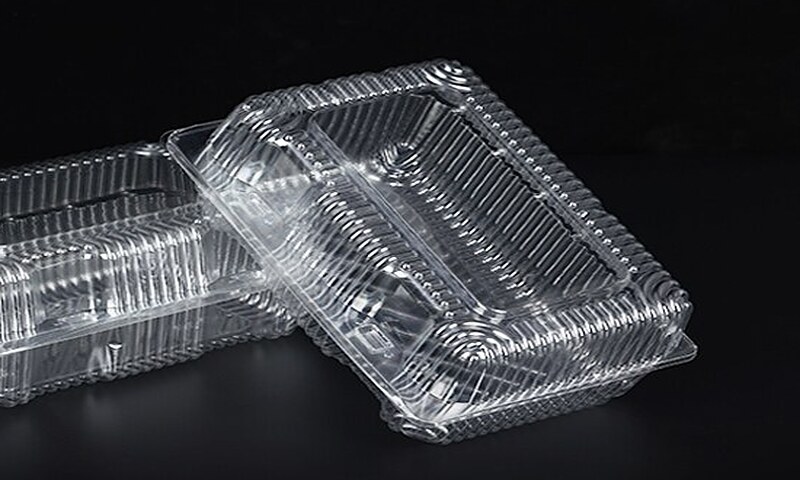
Sushi packaging is almost always a two-piece system: a rigid tray holding the product and a separate dome lid that snaps onto the tray's rim. The tray and lid are sized as a matched pair, so buyers should think of them as one SKU rather than choosing each independently.
- Hand-roll / small format: compact trays for one or two rolls or a single hand roll, often the highest-volume SKU in a program.
- Medium combo trays: sized for 6–12 piece combo packs, the standard supermarket case format.
- Large platters: party-size trays for assorted rolls, sashimi spreads and catering orders, often with a decorative printed base.
- Round poke/chirashi bowls: a round format with a domed lid, used for bowl-style rice dishes rather than rolls.
Anti-Fog Lids: When You Actually Need Them
Refrigerated display cases create a temperature differential between the cold air inside the case and the warmer ambient air outside, which condenses as fog on the inside of a clear plastic lid. Anti-fog treatment is a food-contact-safe surfactant coating that causes condensation to spread into a thin, transparent film instead of beading into visible droplets.
Anti-fog treatment matters most for open-air cold cases with high humidity and frequent door/curtain cycling. Enclosed reach-in cases with tighter humidity control see less fogging, but most supermarket sushi programs still specify anti-fog as standard because the display cost of a single fogged lid — a shopper who can't see the product and moves on — is high relative to the small cost difference.
Ask your supplier whether anti-fog is baked into the resin or applied as a post-mold coating, and how it performs after repeated door-opening cycles rather than just in a single lab test, since real cold-case performance depends on that repeated humidity cycling.
Sizing From Hand Rolls to Platters
Sushi trays are sized by two numbers that must both be specified: the tray footprint (length × width × depth) and the matching lid's outer dimensions and dome height. A shallow tray under a tall dome leaves too much empty headspace, which lets rolls shift and lose their arranged presentation during transport; too little headspace crushes toppings like roe or avocado. If you are replacing an existing supplier's format, send a physical sample or the exact tray and lid drawings rather than a single footprint dimension — small differences in flange width are why lids from one supplier don't always seat on another supplier's tray.
Material & Base Color
| Choice | Where it's used | Trade-off |
|---|---|---|
| Black base, clear dome | The default retail combination | Best contrast for pink/red fish and green garnish; hides minor rice residue |
| Clear base, clear dome | Premium platters, decorative printed bases | Shows off a printed or textured base pattern; less forgiving of any residue |
| PET | Most trays and all anti-fog lids | High clarity, good cold-temperature toughness |
| PS (polystyrene) | Some black tray bases | Lower cost, rigid, but more brittle than PET in cold-chain drops |
Black is the default because it maximizes contrast against pink tuna, orange salmon roe and white rice, and because an opaque base hides the small amount of rice residue that's unavoidable in hand-packed programs. Clear-on-clear is chosen mainly for premium platters where a printed or embossed base pattern is part of the presentation.
Sealing & Tamper Features
Most sushi trays use a snap-fit dome that clicks onto a matching lip molded into the tray rim rather than a heat seal, since sushi is prepared and packed cold and doesn't go through a sealing machine the way a MAP meat tray does. The engineering that matters is dimensional: the lid's inner lip and the tray's outer rim need matched tolerances so the fit is snug enough to survive transport and shelf handling without popping open, but not so tight that store staff struggle to open it one-handed. If your program needs a visibly tamper-evident close (increasingly requested for delivery and grab-and-go programs), ask about a perforated tab or band version rather than assuming the standard snap fit qualifies.
Case Counts & Cold-Chain Handling
Sushi trays typically ship nested (tray inside tray) with lids nested separately, and case counts run higher for small hand-roll formats (rooms of 1,000+ per carton are common) and lower for large platters. Because sushi programs run on tight, frequent delivery cycles rather than large infrequent shipments, ask your supplier for case dimensions and weight up front so your receiving team can plan dock space — this matters more here than in slower-moving categories where storage flexibility offsets a less efficient case pack.
Quality Checks Worth Doing on Receipt
- Lid seats fully onto the tray rim on the first attempt, without needing to be forced or realigned.
- Anti-fog lids show no visible fogging after a cold-case humidity test of at least a few hours.
- Base color is consistent between cartons from the same production run — black in particular can drift subtly between resin batches.
- Trays nest and de-nest cleanly at packing speed without sticking.
- No visible warping in trays stored at refrigerated temperature overnight.
MOQ & Lead Time
Stocked standard sizes can typically ship from a single carton for a trial run. Custom cavity shapes, printed decorative bases or a color change generally require new tooling, with MOQs commonly starting around 30,000–100,000 pieces depending on the size and complexity of the mold, and lead times of roughly 15–30 days after sample approval, plus ocean transit.
Compliance
Sushi trays and lids need the same food-contact documentation as any other format: an FDA 21 CFR statement for the resin, migration data if the goods are EU-bound, and batch traceability. Because sushi is typically eaten without further cooking, buyers should also confirm the anti-fog coating itself carries food-contact clearance rather than assuming any clear coating is automatically food-safe. See our FDA food-contact compliance guide for the full document checklist to request from any factory.
Buyer FAQ
Do all sushi lids need anti-fog treatment?
Can a lid from one supplier fit a tray from a different supplier?
What's the difference between a poke bowl and a standard sushi tray?
Can we get a custom printed base for a premium platter line?
Which is more cost-effective, PET or PS, for a black tray base?
How far in advance should we order for a seasonal sushi promotion?
Need help sizing a sushi tray program?
Send your current tray dimensions, case pack and cold-case setup — our team will confirm the closest stock match or scope a custom tooling quote within one business day.
Related Guides
FDA Compliance Guide
The document checklist to request for any food-contact packaging.
Read the guide →
Meat Tray Buying Guide
Sizing and sealing logic that applies across rigid tray formats.
Read the guide →