The EU Packaging and Packaging Waste Regulation, officially Regulation (EU) 2025/40 and usually called PPWR, has applied across the European Union since 12 August 2026. If you import plastic food trays, clamshells, cups or containers into Spain, Germany, France, Italy or any other member state, it changes what you must ask your supplier for and how you plan your range for 2030. This guide explains the parts that matter most to food-packaging buyers, in the order you will meet them.
This is general information, not legal advice. Several PPWR rules depend on delegated and implementing acts that are still being finalised, so confirm your obligations with your compliance adviser or customs agent before relying on any date or number below.
What PPWR Is and Why It Matters to Importers
PPWR replaces the old Packaging Directive 94/62/EC. The key difference is its legal form: a regulation applies directly and identically in every member state, instead of being transposed into 27 slightly different national laws. A tray that is compliant for a supermarket in Madrid is therefore judged by the same text as one sold in Munich. The rules cover the whole life cycle: substances in the packaging, recyclability, recycled content, minimisation, labelling and the paperwork that proves it.
For importers, the most important point is who carries responsibility. When the manufacturer is outside the EU, the importer takes on the manufacturer's obligations unless an authorised representative has been appointed. In practice that means the person who places the packaging on the EU market needs a documentation file from the factory, not just a price list. For the existing food-contact baseline, see our EU food-contact compliance guide; PPWR sits on top of it rather than replacing it.
Timeline at a Glance
| Date | What applies | Why a food-packaging buyer cares |
|---|---|---|
| 12 Aug 2026 | General application; PFAS limits in food-contact packaging; conformity assessment and EU Declaration of Conformity duties | Already in force: you need evidence on file for every packaging item you place on the market |
| 12 Feb 2028 | Compostability required for certain items (for example tea and coffee bags and fruit-and-vegetable stickers); stricter minimisation of empty space in sales packaging | Mostly outside plastic trays, but it shows the direction of travel |
| 12 Aug 2028 (or 24 months after the implementing acts) | Harmonised pictogram labels showing material composition | Plan artwork space and avoid unsupported claims |
| 1 Jan 2030 (or three years after the methodology act) | Recycled-content targets for plastic packaging; Annex V restricted formats; recyclability grading begins to bite | The date that shapes tooling and material decisions you make this year |
| 1 Jan 2040 | Higher recycled-content targets | Long-term sourcing strategy for rPET and recycled PP |
Some dates are written as "or X months after" because they are tied to Commission acts that were not final when this guide was written. Treat those rows as the earliest possible date.
PFAS in Food-Contact Packaging: Already Limited
The PFAS restriction is the item that is already enforceable. For packaging that comes into contact with food, the regulation sets limits of 25 ppb for each individual non-polymeric PFAS, 250 ppb for total non-polymeric PFAS and 50 ppm for polymeric PFAS.
Plain polypropylene, PET and rPET trays do not use PFAS as a raw material, so the risk is indirect: grease-proof or water-repellent coatings on paper and fibre, certain inks and primers, mould-release agents and processing aids. That is why the practical request to a supplier is not "are you PFAS-free?" but "show me an accredited laboratory report for this exact item". Our PFAS-free packaging guide explains which materials need the closest look and how to read a test report.
Recycled Content for Contact-Sensitive Plastic Packaging
PPWR sets minimum recycled-content shares for plastic packaging, with lower levels for contact-sensitive packaging such as food trays, where regulators accept that recycled material must first be food-safe.
| Packaging type | From 2030 | From 2040 |
|---|---|---|
| Contact-sensitive PET (excluding single-use bottles) | 30% | 50% |
| Contact-sensitive plastic other than PET (for example PP) | 10% | 25% |
| Other plastic packaging | 35% | 65% |
Two practical consequences follow. First, PET clamshells, salad bowls and cold cups are the easiest place to start, because food-grade rPET is established and recycled PET used for food contact must come from a process authorised under Regulation (EU) 2022/1616. Second, recycled polypropylene for food contact is far less available, so the 10% target for PP trays will depend on supply that is still developing. Our PET vs PP vs rPET guide compares the materials, and our materials page lists the rPET programmes we can quote, with recycled-content documentation arranged per order.
Formats Restricted From 2030 (Annex V)
From 1 January 2030 the regulation restricts certain single-use formats. The ones most relevant to food buyers are:
- Single-use plastic packaging for unprocessed fresh fruit and vegetables under 1.5 kg, with defined exemptions for delicate produce. Plan your berry, grape and cherry-tomato range accordingly; see our fruit clamshell guide and the fruit box series.
- Single-use portions of condiments, sauces, creamers, sugar and spices in the hotel, restaurant and catering sector, and certain single-use packaging for food and drink consumed on the premises. This touches sauce pots and dip cups; our portion cup guide covers the alternatives.
The exact scope and exemptions are written into the regulation and may be clarified by guidance, so check the current text for your product before you commit to a long tooling programme.
Documents the Importer Needs From the Factory
From 12 August 2026 the manufacturer must carry out a conformity assessment, prepare technical documentation and draw up an EU Declaration of Conformity before packaging is placed on the market, and keep the file available on request (five years for single-use packaging). When the factory is in China, you should ask for the inputs to that file for each item:
- Material declaration: resin type and grade, additives, colourants, and whether any recycled content is used.
- Food-contact documents: the EU declaration of compliance under Regulation (EU) 10/2011 and Regulation (EC) 1935/2004, and overall and specific migration test reports.
- An accredited laboratory PFAS test report for the exact item, ink and coating combination.
- Recycled-content data and chain-of-custody records for any rPET claim.
- Product weight, dimensions and material composition, to support minimisation and recyclability assessments.
- Traceability: batch coding and quality records, so a problem can be traced to a lot.
Our factory operates under ISO 9001:2015 and BRCGS Packaging certification, and third-party SGS test reports are available on request; certificate numbers and validity dates are supplied directly to buyers during supplier onboarding. We provide these documents as inputs to your file. The Declaration of Conformity itself is the responsibility of the party that places the packaging on the EU market, so agree with your adviser whether that is you or an authorised representative. See the factory and quality page for how batch records are kept.
Minimisation and Weight
PPWR expects packaging to be no larger or heavier than its function requires, and it asks for empty space in sales packaging to be reduced. For tray and clamshell buyers this turns gram weight and fit into compliance topics as well as cost topics: an over-built tray is harder to defend. Our gram weight and cost guide shows how to reduce wall thickness without losing stacking strength or seal quality.
Labelling and Claims
Harmonised pictogram labels showing material composition are due from August 2028 or later, depending on the implementing acts. Until then, the greater risk is your own marketing. Words such as "recyclable", "compostable" and "eco" must be backed by evidence and by the recycling infrastructure in the sales country. Read our packaging claims guide before you print any environmental statement on a tray or lid.
PPWR Buyer Checklist
- List every plastic item you import and mark which fall under fruit-and-vegetable or catering restrictions in 2030.
- Request the six documents above for each item and file them under the product code.
- Ask for an accredited PFAS report for any item with coating, print or paper content.
- Decide who acts as manufacturer or authorised representative for your imports.
- Choose a mono-material design (all PP or all PET) wherever the product allows it.
- Start rPET trials on PET items now, so 2030 volumes are not a first test.
- Review every on-pack claim against the evidence you hold.
- Build the extra document and testing cost into your landed cost; see the landed cost guide.
- Check incoming lots against the specification you filed, using the AQL inspection guide.
- Agree minimum order quantities for any new mould early; see the MOQ and lead time guide.
Common Mistakes
- Treating a supplier's "EU compliant" statement as the file. A statement is not a test report or a declaration.
- Assuming plastic trays are banned. PPWR restricts specific formats and sets design and content targets; it does not prohibit PP or PET food trays as such.
- Ignoring coatings and inks. PFAS and migration risks often sit in the surface treatment rather than the base resin.
- Waiting until 2029. Tooling takes weeks and rPET qualification takes trials; the decisions are due now.
- Using the same documents for every country. The regulation is common, but labelling language and national waste schemes still differ; our import guide for Spain and Latin America covers the practical steps.
How We Support PPWR-Ready Sourcing
We manufacture PP, PET, rPET and CPET trays, clamshells, bowls and cups in our own plant, so material declarations, test reports and batch records come from one source. Send us your item list and target markets and we will tell you which documents we can supply for each, which items suit rPET, and where a lighter or mono-material redesign makes sense. Browse the meat and fresh food trays and cups and accessories, or contact our team for a documentation list.
Buyer FAQ
Does PPWR apply to food packaging made in China?
Is PPWR the same in Spain as in other EU countries?
Are PP and PET food trays banned under PPWR?
Which PFAS limits apply to food-contact packaging?
When do recycled-content targets apply to food trays?
What documents should I request from my packaging supplier?
Questions about this guide?
Tell us your product, quantity and target market — our engineers will help you apply it to your project.
Related Guides
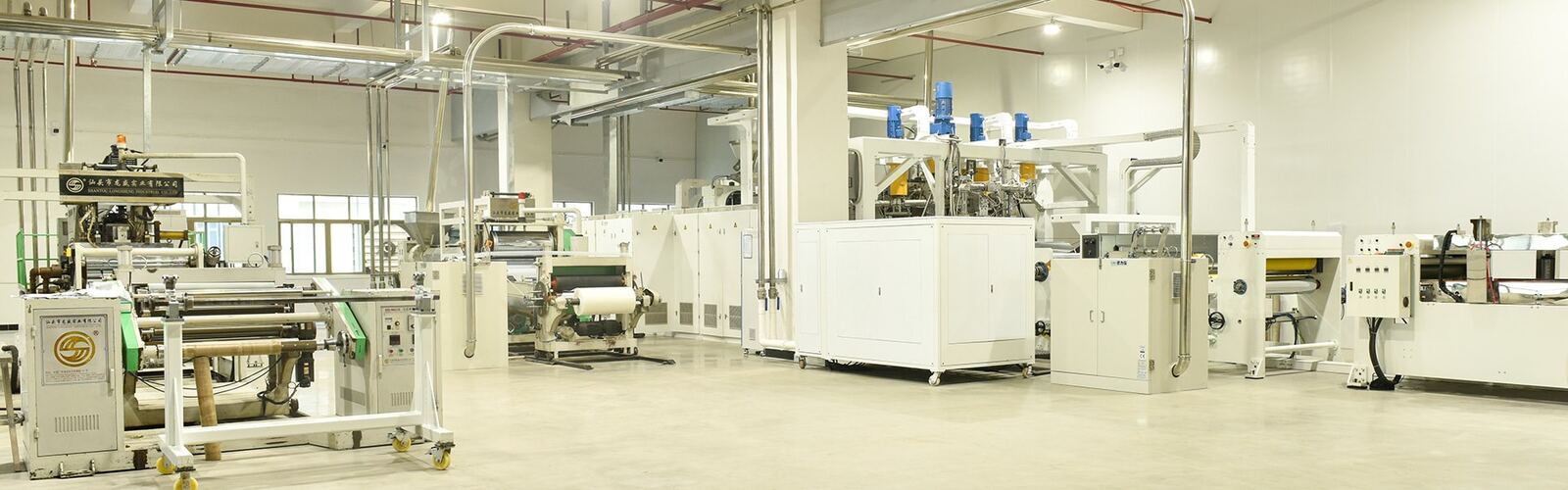
EU Food-Contact Packaging Compliance Guide: EU 10/2011 & REACH
What EU importers should request from a plastic packaging factory: EU 10/2011 Declaration of Compliance, REACH, migration…
Read guide →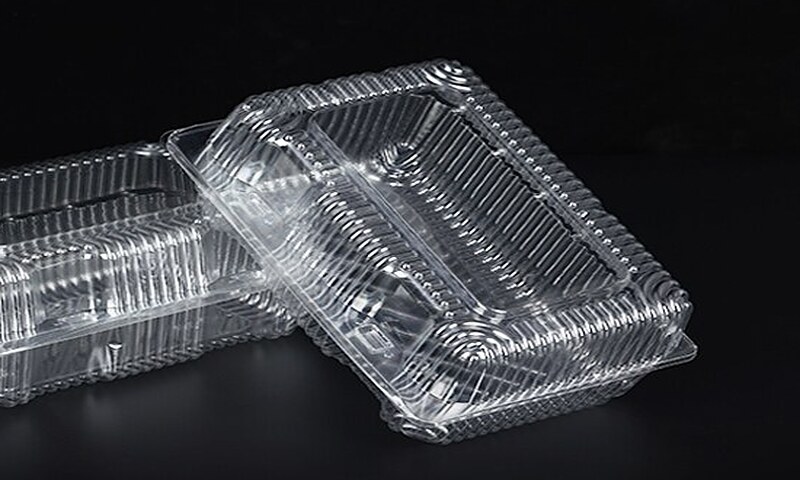
PFAS-Free Food Packaging: Regulations, Testing and How to Source…
What PFAS are, why they appear in grease-resistant food packaging, how US state laws and the EU PPWR restrict them, and how to…
Read guide →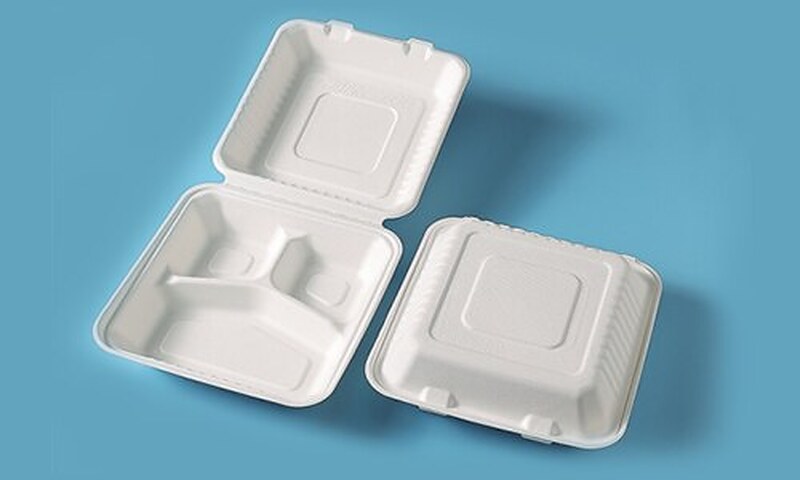
Recyclable, Compostable, Biodegradable: How to Make Packaging…
The real difference between recyclable, compostable and biodegradable food packaging, what evidence each claim needs, and how…
Read guide →
Importing Food Packaging from China to Spain and Latin America: A…
A practical guide for importers in Spain and Latin America: choosing products, compliance documents, Incoterms, shipping,…
Read guide →Food Packaging Migration Test Reports Explained: Overall vs Specific…
A migration report is the strongest proof that a tray or cup is safe for food. Learn what overall and specific migration mean,…
Read guide →