“Eco-friendly” is now one of the most scrutinised words on a food pack. Regulators, retailers and consumer groups increasingly challenge vague environmental claims, and a wrong label can mean rejected listings, relabelling costs or legal exposure. The three terms buyers mix up most often are recyclable, compostable and biodegradable. They describe different end-of-life routes, they need different proof, and they are not interchangeable.
This is general information, not legal advice. Rules differ by country and change often; confirm the current requirements for your market.
The Three Terms, Defined Plainly
| Claim | What it really means | What must be true |
|---|---|---|
| Recyclable | The pack can be collected, sorted and reprocessed into new material | Collection and sorting infrastructure actually exists for most consumers in the market, and the pack does not contaminate the stream |
| Compostable | The pack breaks down under defined composting conditions within a set time, leaving no harmful residue | It passes a recognised standard test, and facilities that accept it exist where it is sold |
| Biodegradable | A material can be broken down by microorganisms, over an unspecified time and environment | Without time, conditions and a standard, the word is vague and increasingly restricted |
Recyclable: Material Is Not Enough
A pack made from a recyclable polymer is not automatically recyclable in practice. What matters is the whole system: is the item collected kerbside, can sorting equipment identify it, and is there a buyer for the recovered material? Practical points for food packaging:
- Mono-material helps. A PP tray with a PP lid is easier to recycle than a PP tray with a PET lid and a paper sleeve. See PET vs PP vs rPET.
- Colour and size matter. Black pigmented plastic can be hard for near-infrared sorters to detect, and very small items fall through screens.
- Food residue and labels. Heavily soiled packs and wrap-around labels can disqualify an item.
- Coated paper. PE-coated board needs mills that can separate the film; see the kraft coatings guide.
- Local wording. In some markets a pack can only say “widely recycled” or show a standard recycling label if a threshold share of the population has access.
Compostable: Home vs Industrial
Compostable packaging is tested against standards such as EN 13432 in Europe and ASTM D6400 in the United States, which look at disintegration, biodegradation, ecotoxicity and heavy-metal content under industrial composting conditions. Separate “home compostable” schemes exist for lower-temperature compost heaps. Key cautions:
- Industrial-compostable does not mean home-compostable, and neither means it will degrade in a landfill or in the sea.
- Certification applies to the exact structure, including coating, inks and adhesives. A compostable coating on a non-compostable board does not make a compostable pack.
- If local composters do not accept food packaging, a compostable claim may mislead. Check acceptance, not just certification. The bagasse packaging guide covers a common example.
- Fibre products may need a separate check for fluorinated additives; see the PFAS-free guide.
Biodegradable: The Riskiest Word
Almost everything biodegrades eventually, so an unqualified “biodegradable” tells the consumer nothing and implies a benefit that may not exist. Several jurisdictions have restricted or discouraged the term for packaging without clear conditions, and so-called oxo-degradable plastics are banned in the EU. Safer practice: avoid the word on consumer-facing packs, or tie it to a specific standard, environment and time frame.
Evidence You Should Hold
- The standard or scheme the claim is based on, with certificate number and the exact product covered.
- A bill of materials showing every component, including coating, ink and adhesive.
- Evidence of collection and acceptance in the markets where you make the claim.
- Third-party test reports from an accredited lab. Our factory operates under ISO 9001:2015 and BRCGS Packaging, and we can arrange SGS testing for finished products.
- A change-control agreement so that no component changes without your knowledge.
Regulatory Direction of Travel
In the EU, the Packaging and Packaging Waste Regulation introduces harmonised recyclability and labelling requirements in stages, and the Green Claims direction is tightening how environmental benefits can be communicated. In the United States, the FTC Green Guides advise marketers against unqualified claims and some states add specific rules for compostable and recyclable labels. The UK applies consumer-protection law to misleading environmental claims. Because timings and thresholds change, keep a short list of the rules for each destination market and review it before every label print.
How to Word Claims Safely
- Be specific: “Tray and lid are PP (5) and recyclable where facilities accept PP” beats “eco-friendly”.
- State the condition: “Industrially compostable where facilities exist. Not home compostable.”
- Do not use leaf logos, green colours or “planet-friendly” wording that implies benefits you cannot support.
- Claim only for the component you can prove. If the lid is not recyclable, say so.
- Match disposal instructions to what the consumer can actually do.
If you are planning an eco range, tell us your target markets and the claim you want to make, and we will suggest a structure and supply documents. Contact us to start.
Buyer FAQ
Is recyclable the same as compostable?
Is biodegradable packaging better than recyclable?
Can I put a compostable claim on a pack with a non-compostable lid?
What is the difference between home and industrial compostable?
What documents should I request from a supplier?
Questions about this guide?
Tell us your product, quantity and target market — our engineers will help you apply it to your project.
Related Guides
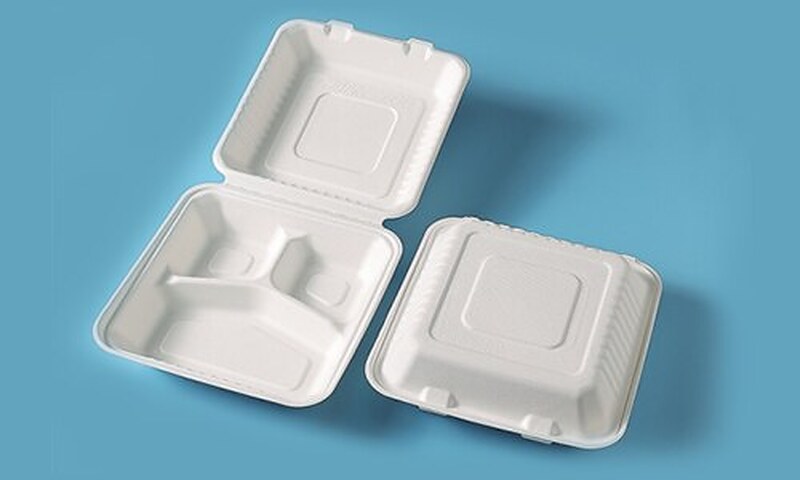
Compostable & Bagasse Food Packaging Guide
What "compostable" actually means, how bagasse compares to PLA and kraft paper, and the labeling claims to get right before…
Read guide →
PFAS-Free Food Packaging: Regulations, Testing and How to Source…
What PFAS are, why they appear in grease-resistant food packaging, how US state laws and the EU PPWR restrict them, and how to…
Read guide →
EU Food-Contact Packaging Compliance Guide: EU 10/2011 & REACH
What EU importers should request from a plastic packaging factory: EU 10/2011 Declaration of Compliance, REACH, migration…
Read guide →PET vs PP vs rPET vs CPET: How to Choose Food Packaging Plastics
A practical buyer's comparison of PET, rPET, PP and CPET for food packaging: clarity, temperature, sealing, recycling and…
Read guide →