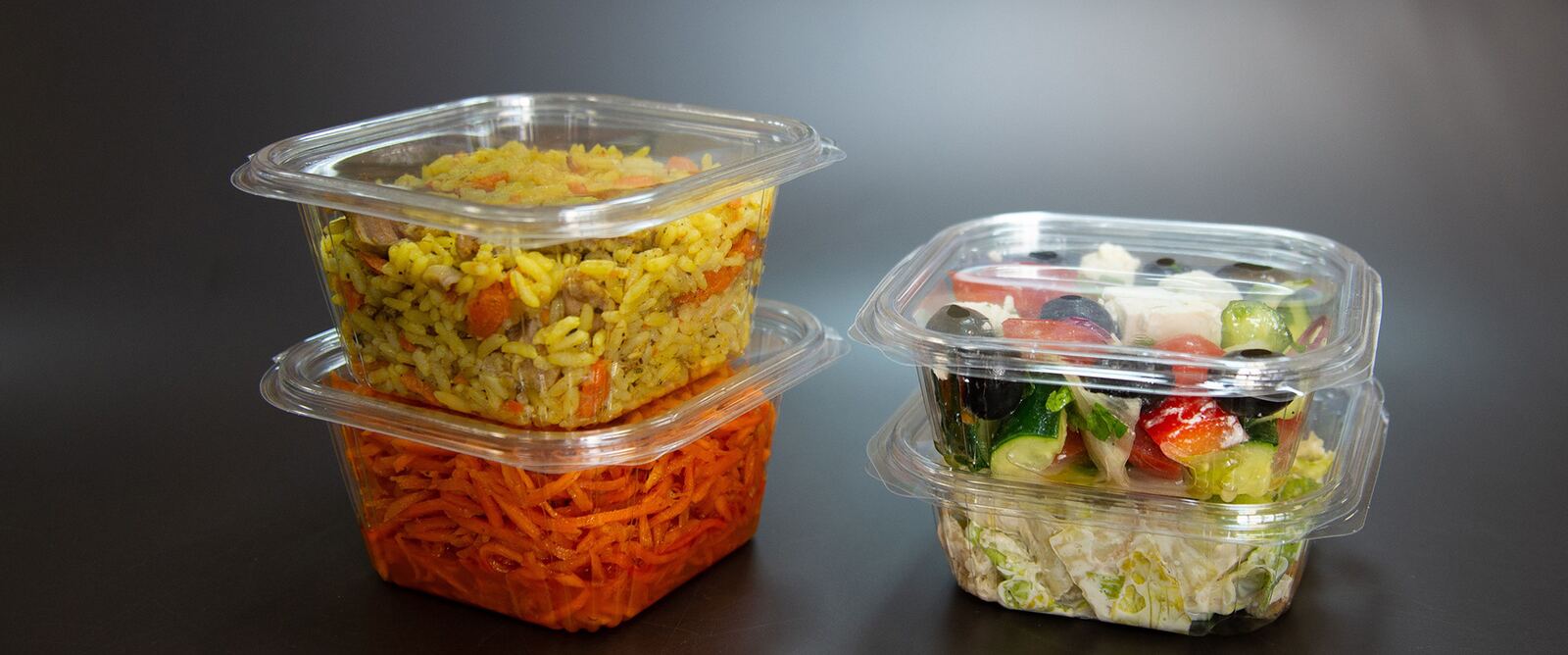
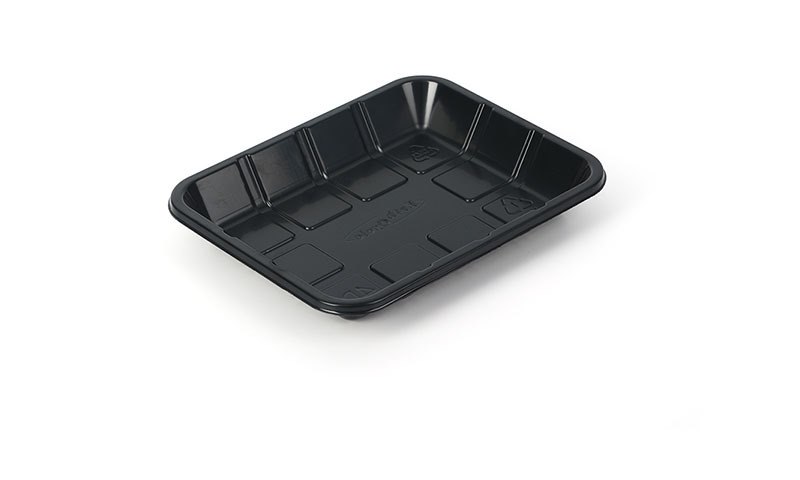
Berries and small fruit punish weak packaging: one crushed clamshell becomes mold and shrink in days. A good punnet balances protection, airflow, visibility and closing speed. This guide covers how to specify vented fruit clamshells for retail and packhouse programs.
Why Venting Is Engineered, Not Random Holes
Fruit respires after harvest, releasing moisture and heat. A fully sealed clamshell traps condensation — free water that drives mold and softening. Vents control airflow to release excess humidity while limiting dehydration that would shrivel berries. The pattern, size and placement of vents are tuned to the crop, pack temperature and cold chain.
- High-respiration, wet crops (sliced fruit, berries) need more ventilation.
- Vents also aid rapid cooling after packing and reduce fogging on the shelf.
- Too much airflow in dry conditions can cause weight loss and shrivel.
PET and rPET for Produce
Clarity sells produce, so APET and rPET dominate clamshells. Both provide rigid walls, crisp hinges and the snap closures packing lines need. rPET lets retailers meet recycled-content targets — typically 30–100% — with GRS documentation supporting the on-pack claim. For how PET and rPET compare with PP and CPET on temperature and sealing, see our materials comparison guide.
Features That Protect Fruit on the Line and Shelf
| Feature | Function |
|---|---|
| Stack shoulders / corners | Bear the weight of upper packs so lids do not crush fruit |
| Tamper-evident snaps | Audible, secure closing with visible evidence of opening |
| One-piece hinge | Fast hand-pack and automated closing; no separate lid to inventory |
| Label pads | Flat zones for price/PLU labels without distorting the pack |
| Reinforced corners | Resist cracking when packs are nested into display cases |
Matching Capacity to the Crop
Standard US produce programs use 250g, 500g and pint/quart-equivalent footprints, plus smaller 170g berry formats and larger family packs. Cavity shape matters as much as volume: blueberries tolerate a deeper pack, while raspberries and strawberries need shallower fills to limit bottom-layer compression. Custom cavities can be tooled for proprietary retail programs.
Cold Chain and Transit: Where Clamshells Actually Fail
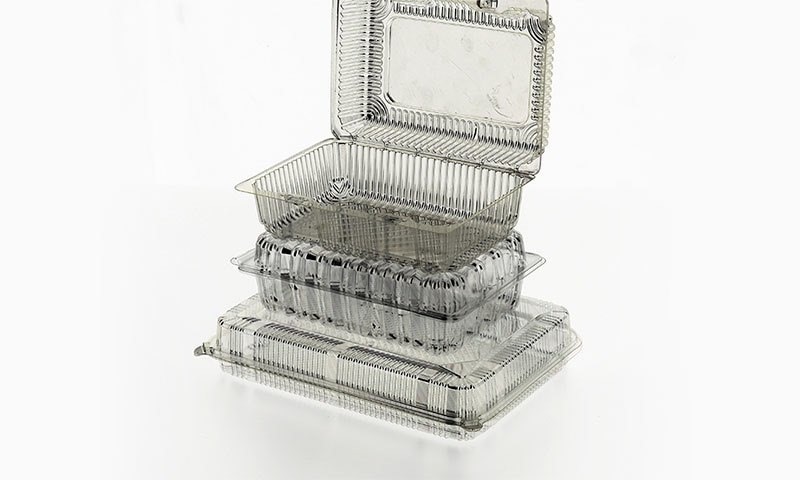
Most clamshell field failures trace back to handling between the packhouse and the shelf, not the mold itself. Buyers evaluating a new clamshell supplier should check these transit-specific points in addition to the packaging spec:
- Pre-cooling compatibility: vent placement should not trap the fruit's own respiration heat during forced-air or hydro-cooling, or the cold chain benefit is lost before the truck even loads.
- Palletized compression: stack-shoulder strength should be validated at full pallet height under refrigerated warehouse conditions, not just at room temperature on a bench.
- Condensation on temperature swings: a clamshell that performs well in a steady 34–36°F cold room can still fog or sweat when a pallet moves between a cooler and an unrefrigerated dock — ask the factory whether the vent pattern was tested across a temperature-cycle, not just static cold storage.
- Case-ready display: if the clamshell ships inside a corrugated tray for direct-to-shelf display, confirm the clamshell footprint and the tray footprint were engineered together, not sourced from two separate suppliers.
Receiving and Line Checks
- Hinge flex — lids open and close repeatedly without splitting.
- Snap engagement — a firm, even close with no pop-open corners.
- Vent consistency — no blocked holes across production lots.
- Clarity — clear walls without haze or contamination.
- Nesting and case counts — smooth denesting at packing speed.
Recycled Content and Reusability Claims
Specify the exact rPET percentage and require GRS documentation rather than accepting "contains recycled material." PET clamshells are captured in many grocery-store take-back and some curbside programs; communicate disposal accurately and avoid calling conventional PET "compostable."
Compliance for Produce Packaging
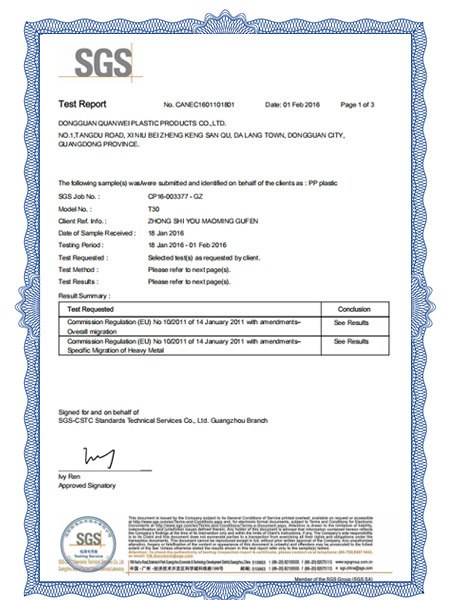
Fresh produce packaging still needs the same food-contact documentation as any other format — an FDA statement for the resin and any colorant, migration data if the program is EU-bound, and a GRS certificate wherever recycled content is claimed. See our FDA Food-Contact Compliance Guide for the full document checklist to request from a supplier before the first PO.
Buyer FAQ
Do vented clamshells make berries dry out?
What recycled-content percentage can clamshells use?
Are clamshells tamper-evident?
Can you make a custom cavity for our fruit?
Why does my clamshell fog up even though it stays refrigerated?
What compliance documents apply to produce clamshells specifically?
Need a material or size recommendation?
Send your product, shelf temperature, sealing method and annual volume — our engineering team replies with a resin, gauge and format recommendation and factory pricing within one business day.
Related Guides