Fresh meat, poultry and fish release liquid (“purge” or exudate) during storage. If that liquid pools in the tray, the product looks unappetising, spoils faster and can leak onto other goods. An absorbent pad is a small, low-cost component that solves this, but choosing the wrong type or size creates its own problems. This guide explains what to look for.
What an Absorbent Pad Does
- Pulls liquid away from the surface of the meat, improving appearance.
- Locks the liquid in so it does not slosh around when the pack is handled.
- Reduces conditions where bacteria multiply in standing liquid.
- Helps prevent leakage, especially in film-sealed and modified-atmosphere packs.
Pad Construction
A typical pad is a sandwich: a perforated food-contact top layer, an absorbent core, and a bottom layer.
| Layer | Typical material | Purpose |
|---|---|---|
| Top (food side) | Perforated PE or non-woven polypropylene | Lets liquid pass in; stays clean against the food |
| Core | Cellulose fluff, often with superabsorbent polymer (SAP) | Holds liquid; SAP gels it so it does not release under pressure |
| Bottom | PE film or non-woven | Stops liquid reaching the tray; keeps the pad in place |
The pad is usually in contact with raw meat or sits under it, so each material must be suitable for food contact; see the FDA and EU guides.
Absorption Capacity and Sizing
Capacity is expressed in millilitres or grams of liquid absorbed per pad or per square metre. The right capacity depends on how much exudate the product gives off during its shelf life, which varies by species, cut, freezing history and storage temperature. A practical way to size a pad:
- Weigh a sample pack, store it at the real storage temperature for the intended shelf life and collect the liquid released.
- Choose a pad whose capacity comfortably exceeds that volume, with a safety margin.
- Pick dimensions slightly smaller than the tray’s inner base so the pad does not ride up the walls or stick under the seal flange.
A pad that is too large can interfere with heat sealing, and one that is too small leaves gaps for liquid to pool. See the meat tray buying guide for tray sizes.
Special Pad Options
- Antimicrobial pads: some contain agents intended to limit microbial growth in the exudate. These claims depend on the agent and the market, so check regulatory status and supporting evidence before using them.
- Odour control or colour-neutral cores: to avoid a visible pink or red stain on the white pad.
- Oxygen-scavenging pads: for certain modified-atmosphere applications. Check compatibility with your gas mix; see the MAP guide.
- Printed or coloured pads: printed pads should use food-safe inks and be tested to confirm no transfer.
Common Problems
- Pad too small or thin. Liquid pools around the edges.
- Pad pressed against the film. It can compromise the seal or wick liquid upward.
- Fibres or SAP migrating. Poor-quality pads can shed particles onto the food; the top layer should be intact.
- Moisture-sensitive cores in humid storage. Keep pads dry before use and in closed packaging.
Tray Design Helps
A tray with a slightly raised base or ribs lets liquid drain below the product, so it works with a smaller pad. Combined with leak-proof lidding film (see the leak-proof guide), this limits waste and complaints.
Testing and Quality
- Run a shelf-life trial with the real product and note liquid volume, odour and appearance at intervals.
- Test the pad’s absorption under light pressure, not only free swell.
- Check the pad’s food-contact documents and ask for a migration report.
- Inspect incoming lots for contamination and uniform size; see the AQL guide.
Our factory operates under ISO 9001:2015 and BRCGS Packaging, and SGS test reports can be supplied for trays. Send us your product, tray size and shelf-life target through the contact page and we will recommend a tray and pad combination.
Buyer FAQ
What is an absorbent pad made of?
How do I choose the right pad size?
Can an absorbent pad affect heat sealing?
Are antimicrobial pads necessary?
Do pads need food-contact compliance documents?
Questions about this guide?
Tell us your product, quantity and target market — our engineers will help you apply it to your project.
Related Guides
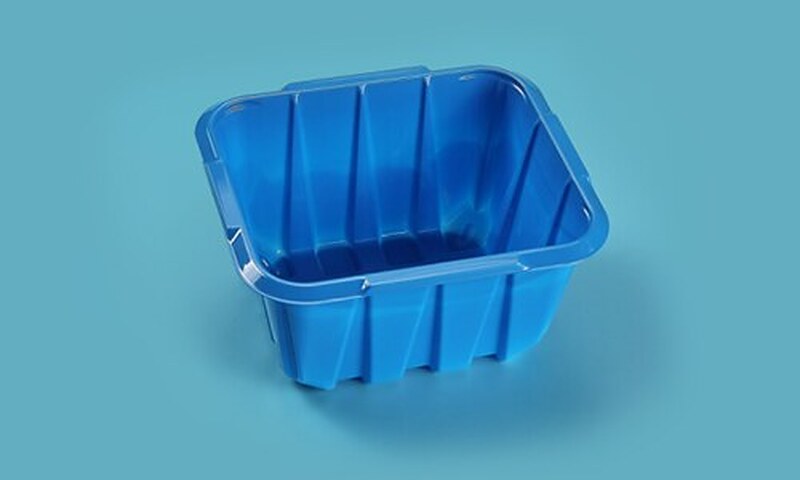
Meat Tray Buying Guide: MAP, Skin-Pack and Overwrap Trays
How wholesale buyers should specify meat and fresh-food trays: MAP vs skin-pack vs overwrap, PP material and color, sealer die…
Read guide →Modified Atmosphere Packaging (MAP): Barrier Trays and Films That…
How MAP works for meat, poultry, fish and fresh food: EVOH barrier trays, lidding films, gas mixes, oxygen transmission rates…
Read guide →
PET vs PP vs rPET vs CPET: How to Choose Food Packaging Plastics
A practical buyer's comparison of PET, rPET, PP and CPET for food packaging: clarity, temperature, sealing, recycling and…
Read guide →
Incoming Quality Inspection & AQL Guide for Imported Food Packaging
How importers inspect food packaging before and after shipment: AQL sampling, critical/major/minor defects, pre-shipment…
Read guide →