Frozen lines put more stress on a tray than almost any other food-packaging application: blast freezing, months in a -18°C warehouse, rough handling on a conveyor, then either a microwave or (for some SKUs) a conventional oven at the other end. Picking the wrong material or the wrong compartment layout shows up as cracked corners at retail, seal failures after reheat, or a tray that simply won't sit flat in an automated lidding line. This guide covers how to choose between PP and CPET for frozen applications specifically, walks through our six stocked FF-series trays, and lays out what to check before you commit to a production run.
PP vs CPET: Picking the Right Material for a Frozen Line
For frozen-only applications — dumplings, steam buns, frozen fruit or vegetable portions, anything that will be reheated in a microwave rather than a conventional oven — PP (polypropylene) is almost always the right call. It stays flexible at sub-zero temperatures, resists the mechanical stress of vibration and stacking during distribution, and costs meaningfully less per unit than CPET at volume. Its ceiling is around 250°F (120°C), which covers microwave reheat comfortably but rules it out for oven-ready meals.
If any part of your line needs freezer-to-conventional-oven capability — a ready meal a retailer will market as "oven bake, no need to thaw" — that SKU needs CPET (crystallized PET) instead, rated up to roughly 400–450°F. We cover the full technical comparison, including sealing-film mismatches and cost trade-offs, in our companion guide, CPET vs PP for Frozen & Ready Meal Trays — read that one first if you're still deciding between the two materials. This guide assumes you've landed on PP for a microwave-only frozen product and walks through picking the right size and layout from what we stock.
Our FF-Series Frozen Tray Lineup
All six of our stocked frozen trays are PP, sized around real production runs we already fill for dumpling, steam-bun and portioned-meal customers:
| SKU | Name | Size (mm) | Size (in) | Case Pack | Color |
|---|---|---|---|---|---|
| FF001 | 18-Cavity Dumpling Tray | 275×195×35 | 10.83×7.68×1.38 | 1,000 | Semi-Clear |
| FF002 | 24-Cavity Dumpling Tray | 270×195×35 | 10.63×7.68×1.38 | 1,000 | Yellow |
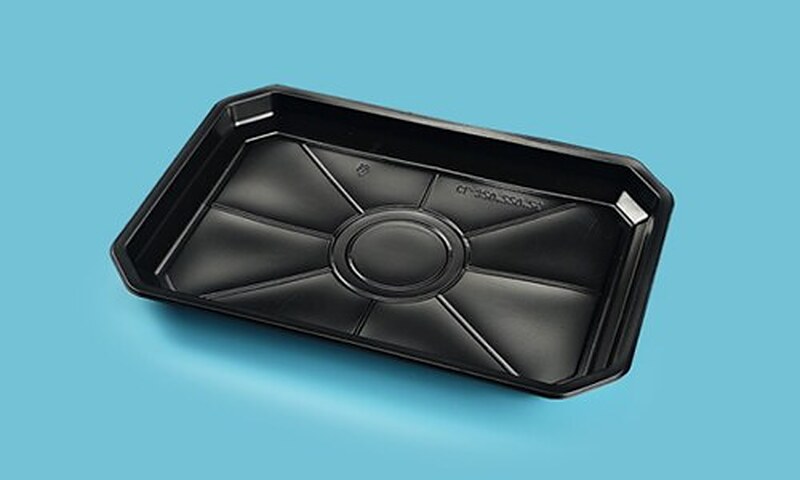
| FF003 | Shallow Frozen Meal Tray | 230×160×20 | 9.06×6.3×0.79 | 600 | Black |
| FF004 | Large Frozen Meal Tray | 320×220×25 | 12.6×8.66×0.98 | 300 | Black |
| FF005 | 3-Cell Steam Bun Tray | 280×185×35 | 11.0×7.28×1.38 | 500 | Semi-Clear |
| FF006 | 12-Cavity Steam Bun Tray | 279×204×38 | 10.98×8.03×1.5 | 500 | Semi-Clear |
The two dumpling trays (FF001/FF002) differ mainly in cavity count and depth for slightly different dumpling sizes — sample both before committing if you're not certain which cavity spacing fits your product. FF003/FF004 are flat-bottom meal trays sized for portioned rice, noodle or protein-and-side combinations; FF004's larger footprint suits family-size or two-compartment layouts. FF005/FF006 are shaped specifically to cradle steam buns without crushing them during freezing and transit.
Matching Compartments to the Meal
A single deep cavity works for a homogenous product like dumplings, but a multi-component frozen meal (protein, starch, vegetable) needs enough compartment separation to stop sauces migrating and to let each component reheat evenly — a thin vegetable portion overcooks in the time a dense protein portion needs to heat through, if they share a compartment. Most ready-meal layouts use one to three compartments; more than that mostly adds tooling cost without a real benefit unless your product genuinely has that many distinct components. If you don't see a compartment layout that matches your product among what we stock, tell us the component count and rough portion sizes and we'll quote a custom cavity design — custom tooling MOQs typically run 30,000–100,000 pieces depending on complexity.
Sealing Film and Lidding Compatibility
A frozen tray is only as good as the seal on top of it. Confirm your film supplier's rated temperature range against how the end product will actually be reheated — a film rated for microwave-only use will delaminate or blister if a customer puts a labeled "oven-ready" product in a conventional oven, and that mismatch is a customer-facing failure, not a tray defect, but it lands on your desk regardless. For PP trays reheated by microwave, standard PP-compatible peelable films work well; confirm flange width and flatness tolerance with your film supplier before your first production run, since a flange that's a millimeter narrower than expected can cause seal-line lifting on high-speed lidding equipment.
Cold-Chain and Distribution Durability
Blast freezing and prolonged cold storage make PP brittle at the margins if wall thickness is inconsistent — ask for a drop test at -18°C as part of your first-article inspection, not just at room temperature, since a tray that survives a room-temperature drop test can still crack after weeks in a freezer. Stacking strength matters more for frozen distribution than for ambient product, since pallets sit in cold storage for months rather than days; confirm nesting depth and empty-tray stacking height so your warehouse racking calculations are based on real numbers, not the flat case dimension.
Custom Branding and Private Label
Most of our frozen customers run private label or retailer-branded packaging rather than generic trays. We support direct printing, pressure-sensitive labels, shrink sleeves and in-mold labeling (IML) on frozen SKUs — IML in particular holds up well through freezer storage since the label is molded into the tray wall rather than applied afterward. See our branding and printing guide for a full cost and MOQ comparison across these four methods.
MOQ, Lead Time and Sampling
Stocked sizes (the six above) are available from smaller trial quantities suited to a first production run or a retailer sample submission. Custom cavity layouts or non-stock colors move to standard tooling MOQs (30,000–100,000 pieces) with 15–30 day production lead times plus transit. Always request physical samples before committing to a full order — photos don't show wall-thickness consistency or flex, and both matter more for frozen product than for ambient packaging. If you're sourcing multiple SKUs from China for the first time, our sourcing guide covers stock vs custom MOQ, tooling lead time and shipping terms in more depth.
Compliance
All our PP and CPET trays are manufactured under our factory's ISO 9001:2015 quality system and BRCGS Packaging certification, with SGS third-party test reports available on request. See our FDA food-contact compliance guide for what documentation to request before your first order, and our EU compliance guide if you're importing into the EU.
Buyer FAQ
Can the same tray design work for both freezer and microwave use?
What's the difference between FF001 and FF002?
Do I need a different tray for sauce-based frozen meals?
How do I know if I need PP or CPET?
What case pack sizes are available?
Can you supply printed or labeled trays for retail frozen sections?
Not sure which FF-series tray fits your product?
Send your product type, portion count and target reheat method — our team will confirm the closest stock match and quote within one business day.
Related Guides
CPET vs PP for Frozen & Ready Meal Trays
The full material comparison: oven safety, freezer performance and cost.
Read the guide →
FDA Compliance Guide
The document checklist to request for any food-contact packaging.
Read the guide →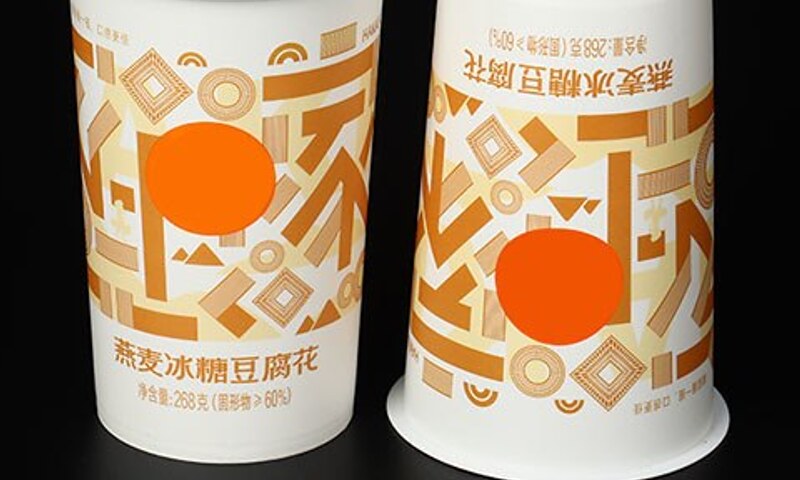
Custom Branding & Printing Guide
Direct print vs labels vs IML for private-label frozen packaging.
Read guide →